Puppy Eyes Decoded: Why Dogs Give That Irresistible Look
By Sniff & Bark Dogwear
If you’ve ever felt your heart melt when your dog looks at you with those big, soulful eyes, you’re not alone. But have you ever wondered why dogs do it? Is it just cuteness, or is there more going on behind those adorable gazes? Let’s break it down.
1. It’s Not Just a Cute Trick
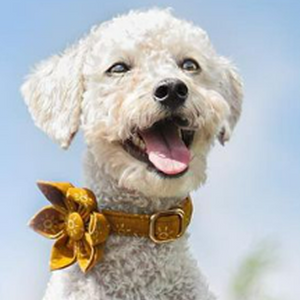
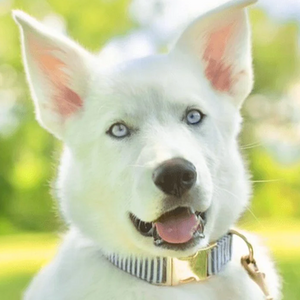
Dogs aren’t born knowing how to make you swoon. Research shows that over thousands of years of domestication, dogs have evolved to communicate with humans in ways other animals haven’t. That classic “puppy eyes” look isn’t just a coincidence—it’s a way to grab your attention and connect with you emotionally.
2. The Science Behind Puppy Eyes
A 2019 study discovered that dogs have a small muscle around their eyes (the levator anguli oculi medialis) that lets them raise their inner eyebrows. Humans find this expression irresistible because it resembles a sad, pleading look—triggering our nurturing instincts. Basically, your dog has a built-in heart-melter.
3. Emotional Communication
Dogs can sense your mood and often use puppy eyes to express their own feelings or get what they want—whether that’s food, playtime, or extra cuddles. It’s their way of saying: “Hey, notice me!” And it works every time.
4. It’s a Two-Way Bond
Every glance, every raised eyebrow, is part of the bond you share. Puppy eyes aren’t manipulation—they’re communication. And the more you respond with love, the stronger your connection becomes.
Fun Fact: Dogs vs. Wolves
Interestingly, wolves don’t make the same puppy-eyed expressions. This skill developed specifically in domestic dogs as a way to communicate with humans. So every adorable glance from your pup? It’s evolution at work!
Next time your dog hits you with that gaze, remember: it’s more than just cute. It’s a powerful way to communicate, bond, and keep your heart thoroughly melted.
References
Kaminski, J., Waller, B. M., Diogo, R., Hartstone-Rose, A., & Burrows, A. M. (2019).Evolution of facial muscle anatomy in dogs. Proceedings of the National Academy of Sciences (PNAS), 116(29), 14677–14681.
Gácsi, M., Győri, B., Virányi, Z., Kubinyi, E., Range, F., Belényi, B., … & Miklósi, Á. (2009). Explaining dog–human communication: A “theory of mind” approach.Animal Cognition, 12, 563–573.
Caeiro, C. C., Guo, K., & Mills, D. S. (2017). Reading the eyes of dogs: Evidence for the effect of the “puppy dog eyes” muscle on human perceptions.Scientific Reports, 7, 12207.
Hare, B., Call, J., & Tomasello, M. (2002). The domestication of social cognition in dogs.Science, 298(5598), 1634–1636.
Miklósi, Á., & Topál, J. (2013). Dog Behaviour, Evolution, and Cognition. Oxford University Press.